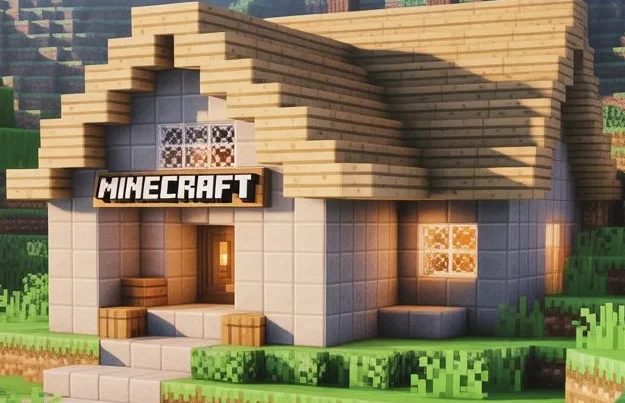
Why player like minecraft redstone builds?
minecraft redstone builds makes Minecraft feel alive. You press a button, a door opens, a lamp lights up, or a trap fires at the right time. Each build teaches a new trick, so players grow fast. A simple circuit can grow into a full machine with pistons, sensors, and minecarts.
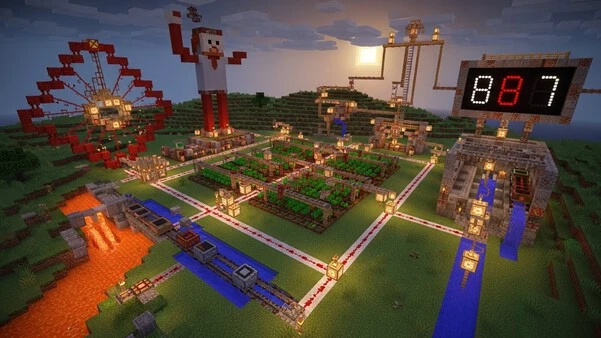
This guide helps you learn that path. We’ll cover doors, farms, traps, and small machines that work in both survival and multiplayer worlds. I’ll point to trusted sources like the minecraft redstone builds Wiki when we hit something technical, so you always know where to dig deeper.
What is minecraft redstone builds?
minecraft redstone builds acts like the wiring inside your world. Redstone dust carries a signal. A lever, button, or pressure plate sends that signal forward. A repeater boosts the distance. A comparator reads containers or checks if a signal changes. An observer watches blocks and reacts. Pistons move blocks and create motion for doors, farms, and traps.
These parts work together in simple ways. You flip a lever, and a lamp turns on. You press a button, and a door slides open. You run dust through blocks to send a signal around corners or up a small tower.
Java and Bedrock behave a bit differently. Minecraft Patch Download Java offers smoother timings and cleaner piston moves. Bedrock changes tick speeds, so some circuits fire faster or break sooner. The minecraft redstone builds Wiki explains these differences in detail, and it helps when you want reliable builds on both versions.
Starter Builds (Anyone Can Make These)
Button Door & Basic Door Variants
Start with a minecraft redstone builds simple button door. Press the button. The door slides open. Easy and reliable for beginners.
Try a small hidden door. minecraft redstone builds Use a lever or pressure plate. It hides rooms or chests without taking space. These doors teach basic piston timing and dust layout.
Simple Redstone Lamp System
A lamp switch is a quick, satisfying build. Flip a lever. Light turns on. Flip again. It goes off.
Add a motion-sensor lamp using an observer and daylight detector. Lights turn on when needed. Great for survival bases and farms.
Starter Traps
Make a basic arrow trap. Connect dispensers to a pressure plate or button. It fires arrows at mobs or enemies automatically.
Try a pressure-plate minecraft redstone builds NT trap minecraft redstone builds carefully. Step on the plate. TNT activates safely away from your base. These traps teach Redstone signal flow and timing.
Popular Builds for Survival Worlds
Auto Farms
An auto chicken farm gives cooked chicken and feathers automatically. Use a dispenser, hopper, and Redstone clock.
An auto egg farm collects eggs into chests without touching chickens. Perfect for food or trading.
A wheat farm minecraft redstone builds layout plants, harvests, and collects wheat with pistons or observers.
Combine crop harvesters with water sweeps and hopper minecarts for large fields. You save time and keep your farm organized.
Storage & Sorting
An item sorter separates blocks, ores, and tools automatically. It keeps chests neat.
Bulk item input funnels minecraft redstone builds resources into your storage without manual work.
Add overflow protection to stop lost items when chests fill up. Simple Redstone wiring prevents mistakes.
Base Improvements
A minecraft redstone builds doorbell alerts you when someone enters your house.
A working lamp layout lights your base efficiently, using switches or daylight sensors.
Trash disposal systems safely remove unwanted items.
Create secret rooms and hidden enchanting tables for privacy. Pistons and hidden doors keep valuables safe.
Doors & Hidden Entrances
Piston Doors
A 2x2 piston door is compact and easy to build. Press a button, and the door slides smoothly.A 3x3 piston door is bigger and more impressive. It takes careful Redstone timing.For minecraft redstone builds Bedrock players, adjust piston timings. Signals can travel faster, so use repeaters to sync movement.
Hidden Doors
A bookshelf door blends into libraries. Push a hidden lever, and shelves move aside.A staircase door hides rooms under stairs. Simple dust wiring opens it instantly.A one-wide flush door fits tight spaces. It disappears into walls when closed.
Wireless Piston Door
Wireless doors work with projectiles or ender pearls. Shoot at a target or throw a pearl.
Observers detect the event. Pistons activate remotely. Perfect for secret entrances or mob-proof bases.
Machines & Contraptions
Auto Crafter & Dispenser Crafter
An auto crafter crafts items automatically. Connect hoppers and chests. It saves time in survival.minecraft redstone builds A dispenser crafter shoots items when needed. Useful for farms or defense.Use a compact layout to save space. Both work well in survival bases and multiplayer worlds.
Flying Machines
Build basic slime or honey engines to move blocks automatically.Change directions with sticky pistons and observers.Combine with rails for a flying machine elevator. It carries items or players across gaps.
Elevators
A slime elevator moves players straight up quickly.A bubble elevator uses water and soul sand or magma, with Redstone features for control.A minecart elevator can lift mobs, items, or players safely.
Turrets & Defense
An auto turret fires arrows using dispensers and Redstone clocks.
Use lava or TNT traps for base defense carefully.
Set up an arrow sensor system to detect enemies automatically.
Advanced Builds
Redstone Factory Concepts
A bulk smelter processes ores quickly. Use hoppers and furnaces in a chain.Multi-level storage organizes items automatically. Each floor can handle different materials.Link multiple farms with Redstone to create a multi-farm system. It collects and sorts resources efficiently.
Instant Redstone Wire
Instant wires transmit signals without visible delay.Use them for doors, traps, or timing-sensitive machines.Materials needed: Redstone dust, repeaters, pistons, and blocks.
TNT Duper (Farms & Mining)
Some TNT dupers still work in certain game versions.Always follow safety tips to prevent base damage.Check Bedrock vs Java differences. Timing and block updates affect performance.
Pearl-Based Triggers
A pearl stasis chamber holds ender pearls for precise activation.Use them to return to base quickly or trigger secret entrances.Combine with pistons and observers for smooth operation.
Bedrock vs Java Redstone Notes
Pistons
Java pistons move smoothly and predictably. Bedrock pistons may skip ticks or push blocks differently. Test builds before using in survival.
Sensors
Observers, daylight detectors, and tripwires react faster in Bedrock. Java signals follow strict tick rules. Adjust timing accordingly.
Timings
Redstone clocks and repeaters behave slightly differently. Bedrock can make machines faster but less precise. Java offers stable, consistent signals.
Lag Behavior
Bedrock handles multiple farms with less lag. Java may slow down with large Redstone machines. Optimize layouts to avoid slowdowns.
Mob Cap Differences for Farms
Bedrock allows more mobs per area, boosting farm output. Java has stricter mob limits. Consider spacing and chunk loading when building large farms.
Redstone Hacks & Quick Tips
Extend Signals
Use repeaters to carry Redstone signals farther. Each repeater adds distance without weakening power.
Compact Piston Tricks
Stack pistons in tight spaces. Combine sticky pistons and observers for small, efficient machines.
Torch Tower Tricks
Torch towers invert signals and boost power. Use them to trigger multiple devices at once.
Common Mistakes
Don’t cross wires accidentally. Avoid forgetting repeaters on long circuits. Test machines step by step.
Stop Laggy Builds
Limit moving blocks and entities. Spread farms across chunks to reduce slowdown.
Hide Wiring Easily
Bury dust under floors or behind walls. Use carpets and slabs to keep circuits invisible but accessible.
Complete Walkthrough Section
Simple Door
Materials: 2 doors, Redstone dust, lever, blocks
Layout: Place doors in doorway, connect lever with dust to doors
Steps:
- Place doors
- Lay dust from lever to doors
- Test by flipping lever
Auto Chicken Farm
Materials: Dispenser, hopper, chest, Redstone clock, eggs, chickens
Layout: Dispenser above collection area, hopper leads to chest
Steps:
- Place dispenser with water or lava
- Add hopper under dispenser to chest
- Place chickens in area
- Connect Redstone clock to dispenser
st: Eggs collected automatically
Piston Door
Materials: Sticky pistons, Redstone dust, lever/button, building blocks
Layout: Pistons on sides, doors in middle
Steps:
- Position pistons around opening
- Connect Redstone dust to lever/button
- Place blocks on pistons
Test: Door opens and closes smoothly
Item Sorter
Materials: Hoppers, chests, Redstone dust, comparators, repeaters
Layout: Hoppers feeding chests with Redstone loop on each
Steps:
- Place chests and hoppers
- Add comparator and dust to each hopper
- Test with different items
Test: Items go to correct chest automatically
Flying Machine Starter
Materials: Slime blocks, sticky pistons, observers, building blocks
Layout: Observers face pistons on slime blocks
Steps:
- Stack pistons and slime blocks
- Connect observers to pistons
- Activate observer to start movement
Test: Machine moves in intended direction
Secret Room Build
Materials: Sticky pistons, blocks, lever/button, Redstone dust
Layout: Pistons hide doorway behind wall
Steps:
- Build hidden doorway with pistons
- Connect dust to lever or button
Cover pistons with matching wall blocks
Test: Room opens and closes without revealing mechanism
Complete Walkthrough Section
- Add chickens into the dispenser area
- Connect Redstone clock to dispenser
Test: Eggs collect automatically; farm works without player input
Materials: Sticky pistons, Redstone dust, lever/button, building blocks
Layout: Pistons on sides; doors in center
Steps:
- Position pistons around doorway
Materials: 2 doors, Redstone dust, lever, building blocks
Layout: Doors in doorway; Redstone dust connects lever to doors
Steps:
- Place the doors in the doorway
- Lay Redstone dust from lever to doors
- Flip the lever to test
Test: Doors open and close instantly
Materials: Dispenser, hopper, chest, Redstone clock, eggs, chickens
Layout: Dispenser above collection area; hopper feeds chest
Steps:
- Place dispenser over collection spot
- Connect hopper to chest under dispenser
Materials: Hoppers, chests, Redstone dust, comparators, repeaters
Layout: Hoppers feed chests; comparators detect items
Steps:
- Place chests and hoppers in line
- Add comparator and Redstone to each hopper
- Test by dropping different items in input
Test: Items automatically go to the correct chest
Materials: Slime blocks, sticky pistons, observers, building blocks
Layout: Observers face Minecraft Skins pistons on slime blocks
Steps:
- Build pistons and attach slime blocks
- Connect observers so they detect block updates
- Activate observer to start movement
Test: Machine moves as intended; direction changes correctly
Materials: Sticky pistons, building blocks, lever/button, Redstone dust
Layout: Pistons hide doorway behind wall
Steps:
- Build doorway with pistons that pull blocks aside
- Connect Redstone dust to lever or button
- Cover pistons with matching wall blocks
Test: Room opens and closes; mechanism stays hidden
FAQs
Final Thoughts
Redstone is fun when you experiment. Try the builds in this guide. Mix ideas and tweak designs to fit your world.
Start small and gradually build more complex machines. After a few tries, even advanced doors, farms, and flying machines feel simple.
Keep testing, observe what works, and enjoy creating. Redstone becomes easier and more satisfying with practice.
Minecraft Redstone Guide – Tips, Tricks, and Builds for Every Player
Redstone in Minecraft is one of the most exciting ways to add functionality, automation, and creativity to your world. Whether you are a beginner or an experienced player, experimenting with Redstone allows you to build everything from simple doors to advanced farms, secret doors, automated item sorters, and flying machines.
Start small by creating basic Redstone circuits, like switches, pistons, and simple traps. As you gain confidence, gradually experiment with more complex Redstone machines such as 2x2 piston doors, hidden storage systems, auto-crafting stations, and Redstone clocks. This step-by-step approach helps you understand the mechanics behind Redstone signals, repeaters, and comparators.
To improve your Redstone skills:
- Test frequently: Observe what works and what doesn’t. Even small tweaks can make a big difference in your builds.
- Mix and match ideas: Combine designs from guides, tutorials, and your own imagination to create unique machines tailored to your world.
- Practice regularly: Like any skill, Redstone becomes easier and more satisfying with repeated experimentation. Over time, even advanced contraptions will feel intuitive.
- Learn from the community: Platforms like YouTube, Reddit, and Minecraft wikis are great sources for inspiration and tutorials.
By mastering Redstone, you can automate farms, create traps, design secret entrances, and enhance your survival world. Not only does it make gameplay more efficient, but it also opens up endless possibilities for creativity and problem-solving.